Alabaster Chandeliers
Request A Quote
Alabaster Chandeliers Manufacturer
Our Alabaster Chandelier collection celebrates the timeless beauty of natural stone. We offer wholesalers and retailers a curated line of luminous, sculptural pieces, while providing luxury project clients with the option for tailored designs that showcase the unique veining and soft glow of each alabaster slab. We focus on honoring the organic material, expert craftsmanship, and creating an ambiance of serene, sophisticated light.
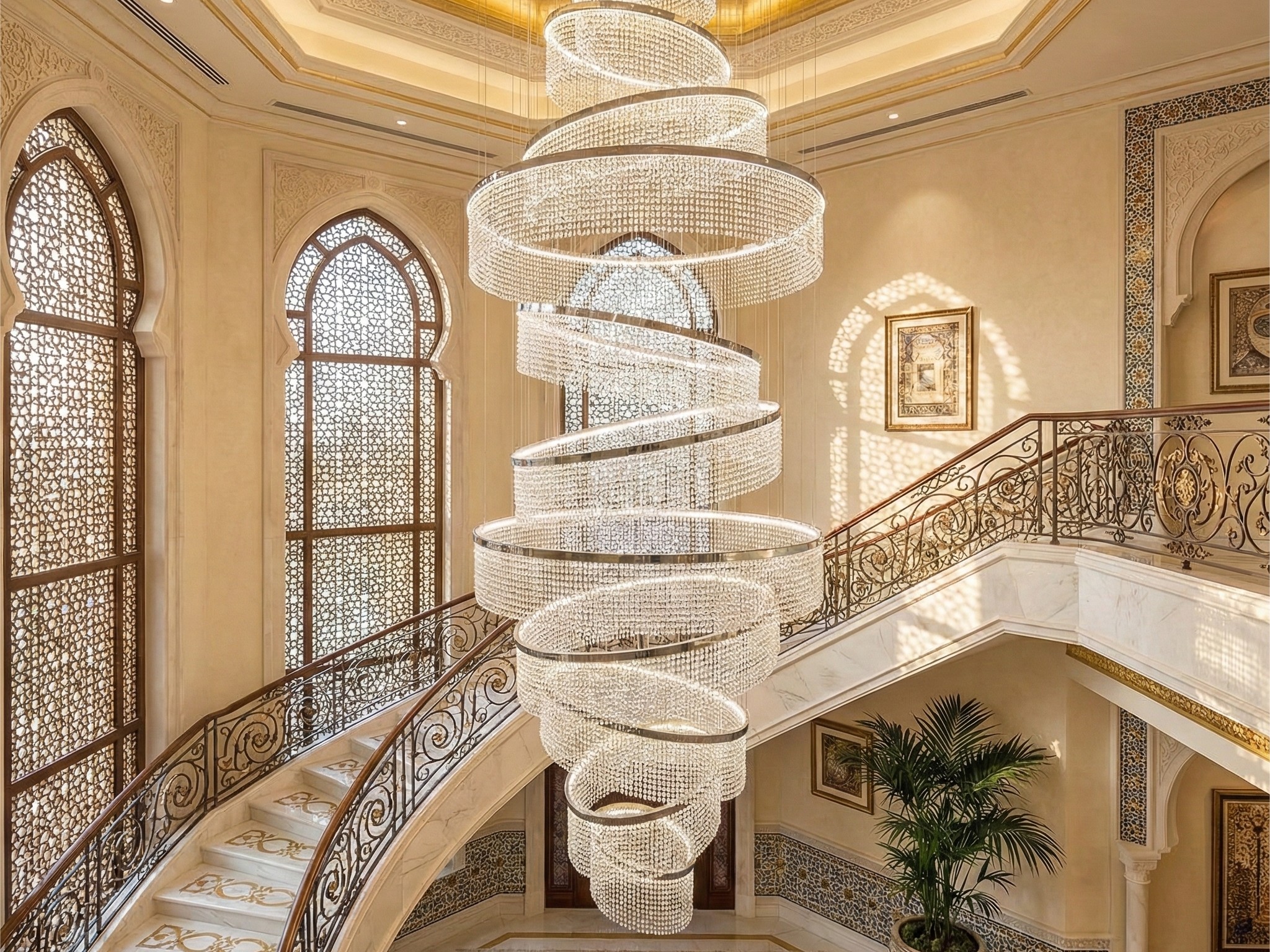
Hospitality Lighting
View DetailsWedding & Banquet Lighting
View DetailsConference & Venue Lighting
View DetailsSales Gallery Lighting
View DetailsVilla & Residence Lighting
View DetailsRestaurant & Bar Lighting
View DetailsRetail & Boutique Lighting
View DetailsRetail & Boutique Lighting
View DetailsRetail & Boutique Lighting
View DetailsRetail & Boutique Lighting
View DetailsRetail & Boutique Lighting
View DetailsRetail & Boutique Lighting
View DetailsA Trade Guide to Alabaster Stone Chandeliers
This guide provides lighting wholesalers, retailers, and furniture trade buyers with the key commercial and product knowledge needed to source alabaster chandeliers. We’ll focus on evaluating material quality, understanding the unique value proposition of stone lighting, and navigating the sourcing process to ensure you acquire pieces that meet the expectations of a luxury-interior clientele and perform reliably in your market.
01. The Market Position & Value of Alabaster Lighting
Alabaster chandeliers occupy a distinct premium niche. They are specified for projects where ambiance, material authenticity, and understated luxury are paramount—think high-end hotel lobbies, boutique spas, fine dining restaurants, and luxury residential interiors. For your business, this category offers a high-margin product that attracts interior designers and affluent customers seeking a natural, timeless statement piece. Its appeal lies not in sparkle, but in its serene glow and sculptural presence.
02. Critical Factors for Assessing Material & Craftsmanship
Evaluating an alabaster fixture requires attention to the stone and its execution:
Stone Quality & Translucency: Genuine, high-quality alabaster should have a pleasing, semi-translucent quality with natural veining or clouding. It should feel solid and cool to the touch. Be wary of resin composites or thinly veneered materials that lack depth and the characteristic warm glow when lit.
Finishing & Craftsmanship: Examine how the stone is finished. Edges should be smooth and precise. The stone’s thickness should be uniform, allowing for even light diffusion. The integration of the stone shade with the metal frame (canopy, arms, chain) should be seamless, with no visible gaps or clumsy fittings. Finish Durability & Consistency: While alabaster is softer than marble, a proper factory finish will include sealing to protect the surface from dust and staining. Check for a smooth, consistent finish without cracks, chips, or uneven patches that could indicate poor processing or lower-grade stone.
Packaging & Fragility Management: Alabaster is a fragile natural material. A supplier’s commitment is evident in their packaging. Inquire about their crating method—it should involve substantial, form-fitting cushioning (like dense foam) to absorb shock and prevent transit damage, which is a critical cost factor for you.
03. The Sourcing Process for a Premium Material
A meticulous approach is necessary when dealing with natural stone products.
Clarify Your Quality Tier: Determine if you are targeting the luxury designer market (requiring top-grade stone with striking veining) or a broader premium market. This will guide your price point and supplier selection.
Request Detailed Visuals & Specifications: Due to the natural variations in stone, high-resolution photos of the actual slab or a representative sample piece are essential. Specifications must list the type of alabaster, dimensions, weight (alabaster is heavy), and details of the metal components.
The Imperative of a Physical Sample: For stock designs, ordering a sample is the only way to verify the true color, translucency, and finish quality of the stone under different lighting conditions. It also allows you to assess the overall build quality and packaging.
Finalize Commercial & Logistical Terms: Understand MOQs, which may be lower for such specialty items. Confirm lead times, shipping methods (these are heavy, fragile goods), insurance requirements, and the warranty policy, which should specifically address structural integrity and defects in the stone.
04. Styles Within the Alabaster Category
Alabaster works within several design frameworks:
Classic Bowl & Tiered Designs: Single or multi-tiered bowls that showcase the stone’s form and glow. Timeless and elegant, suited for traditional or transitional spaces in hospitality and residential settings.
Modern Linear & Geometric: Alabaster panels or cylindrical shades arranged in clean, linear or geometric formations. Offers a contemporary, architectural take on natural material, perfect for modern interiors.
Sculptural & Organic: Pieces that emphasize the raw, carved nature of the stone, with asymmetrical or free-form shapes. Appeals to clients looking for a unique, artistic focal point.
Transitional with Mixed Materials: Combines alabaster shades with metal frames in brushed nickel, black, or brass. This versatile style bridges modern and classic, making it a strong candidate for a best-selling SKU in a curated collection.
05. Practical Considerations for Specification & After-Sales
Successfully selling this category involves managing specific client expectations.
Weight & Installation: Alabaster chandeliers are significantly heavier than their glass or metal counterparts. Ensure your specification sheets clearly state the weight, and advise clients or their contractors to verify ceiling support. Professional installation is highly recommended.
Lighting Performance & Bulb Selection: The magic is in the glow. Recommend warm-white LED bulbs (2700K-3000K) to enhance the stone’s warmth. The fixture is designed for ambient, not task, lighting—managing this expectation is key to customer satisfaction.
Care & Maintenance Guidance: Provide simple care instructions to your end clients: dust with a soft, dry cloth. Avoid harsh chemicals or abrasives. This helps preserve the stone’s finish and reduces potential post-sale inquiries.
Conclusion: Partnering for Natural Elegance
Sourcing alabaster chandeliers successfully means aligning with a supplier that respects the material’s natural characteristics and possesses the technical skill to craft it into a reliable luxury product. It is a category defined by tactile quality and atmospheric impact.
By prioritizing authentic stone quality, precision craftsmanship, and robust logistical planning, you can confidently add these luminous pieces to your premium offerings. They provide a compelling point of differentiation in the market and cater to a clientele that values enduring, natural beauty.
To evaluate the distinct qualities of our Alabaster collection, contact us to request material samples, detailed technical sheets, and discuss commercial terms tailored for the trade.
Download Our Catalog
to see how we’ve helped others realize their vision.
Consult with Our Team
to discuss the specific possibilities for your next project.
Table Of Content
01. The Market Position & Value of Alabaster Lighting02. Critical Factors for Assessing Material & Craftsmanship03. The Sourcing Process for a Premium Material04. Styles Within the Alabaster Category05. Practical Considerations for Specification & After-SalesConclusion: Partnering for Natural Elegance