Hardware Furniture
Custom Lighting for Premier SpacesBespoke Design – Project Manufacturing – End-to-End Partnership.
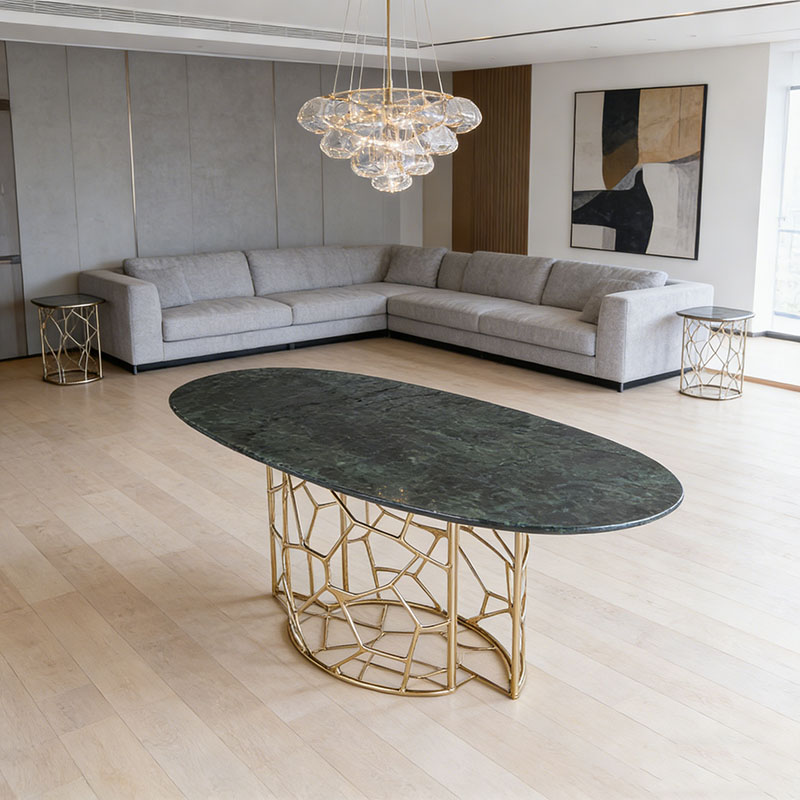
The Definitive Guide to Specifying Custom Lighting for High-End Projects
Specifying lighting for a luxury hotel, a flagship retail space, or a distinguished villa transcends mere product selection. It is an integral part of the architectural narrative—a decisive factor in shaping atmosphere, defining brand identity, and creating lasting emotional impact. Off-the-shelf fixtures often fall short of these aspirations, constrained by standard dimensions, common materials, and generic designs.
This guide is crafted for architects, interior designers, project developers, and procurement specialists who understand that light is a foundational design element. We move beyond catalogs to provide a strategic framework for navigating the entire custom lighting journey. From articulating the “why” behind bespoke solutions to mastering the “how” of a seamless collaboration with a manufacturer, this resource aims to equip you with the insights needed to transform visionary concepts into impeccably executed reality.
Part 1: Why Choose Custom Lighting Over Standard Fixtures?
1.Standard lighting serves a function; custom lighting fulfills a vision. The choice between them is the choice between fitting in and standing out. For projects where excellence is non-negotiable, custom lighting offers irreplaceable advantages:
2.Unique Design Language: Your space tells a unique story. Custom fixtures allow you to develop an original design vocabulary—be it a chandelier inspired by local architecture or a series of wall lights that echo a specific textile pattern—ensuring your project is one-of-a-kind.
3.Perfect Architectural Harmony: Standard sizes rarely align perfectly with ambitious spaces. Custom lighting is engineered to exact dimensions, creating flawless proportions for double-height ceilings, unconventional room layouts, or integrated architectural niches that pre-fabricated options cannot address.
4.Specified Material Excellence: Beyond standard finishes, customization opens a world of material dialogue. You specify the exact brass alloy, the grade of crystal, the texture of glass, or the vein of marble, guaranteeing longevity, tactile quality, and a cohesive material palette throughout the space.
5.Cohesive Project Identity: Custom lighting enables the creation of a unified family of fixtures. A design motif developed for a grand chandelier can be thoughtfully adapted into complementary wall sconces, table lamps, and floor lamps, weaving a consistent visual thread throughout the entire property.
In essence, custom lighting is not an added expense; it is a capital investment in the project’s character, value, and enduring legacy.
Part 2: Key Decisions in Your Custom Lighting Project
Embarking on a custom project involves a series of strategic decisions. Clarifying these early streamlines the process and aligns all stakeholders.
1.Aesthetic & Design Direction: What is the core narrative? Is it classic opulence, minimalist modern, or organic rustic? Establish the style, then drill into details: preferred materials (warm brass vs. cool stainless steel), finishes (polished, antique, brushed), and the desired visual weight of each fixture.
2.Technical & Performance Specifications: Function informs form. Determine critical technical needs: exact dimensions, required light output (lumens) and color temperature (Kelvin), dimming compatibility, IP ratings for damp locations, and any special structural support requirements.
3.Budget Framework & Timeline: Be transparent about budget parameters. Understand that cost is driven by design complexity, material selection, and quantity. Simultaneously, establish a realistic timeline that accommodates design iteration, sampling, production, and shipping, aligning with your project’s critical path.
4.Compliance & Certification: For international projects, specify necessary certifications upfront (e.g., CE, UL, RoHS, IECEE). A qualified manufacturer will engineer compliance into the design from the start.
5.Collaboration Model: ODM or OEM? Define your needs: Do you require the manufacturer to provide original design and engineering from a concept (ODM)? Or do you have complete, ready-to-manufacture technical drawings you need them to execute precisely (OEM)? Most partners, like Tikanna, offer both.
Part 3: The Collaborative Process: How to Work with a Custom Manufacturer
A successful custom lighting outcome hinges on a transparent, phased partnership. Here is the typical workflow with a professional manufacturer:
Phase 1: Project Consultation & Briefing. You share your vision through mood boards, architectural plans, sketches, and performance requirements. A kick-off meeting aligns goals, scope, and constraints.
Phase 2: Design Development & Quotation. The manufacturer’s design team translates the brief into professional 2D/3D drawings and renderings (typically offered as a free service in ODM projects). After iterative refinements, you receive a detailed, itemized quotation based on the finalized design.
Phase 3: Sampling & Physical Approval. A physical prototype is produced. This is the critical stage to approve materials, craftsmanship, finish quality, and overall feel. Upon your written sample approval, bulk production is authorized.
Phase 4: Manufacturing & In-Process QC. Production begins under the manufacturer’s integrated quality control system, with checks at every stage—from material inspection to assembly and wiring—to ensure consistency with the approved sample.
Phase 5: Pre-Shipment Verification & Delivery. Prior to shipping, a comprehensive photo or video inspection report is provided for your final confirmation. The fixtures are then professionally packed and shipped with full documentation, followed by after-sales support.
Part 4: Exploring Styles: A Look at Custom Lighting for Different Applications
Custom lighting adapts to the soul of the space. Here’s how it manifests across key sectors:
1.Hospitality Lighting (Hotels/Resorts): Creates the first and lasting impression. Grand, custom chandeliers define lobbies; sculptural pendants highlight bars; and coordinated suites of wall lights and table lamps bring warmth and functionality to guest corridors and rooms.
2.Villa & Residence Lighting: Expresses personal luxury. Custom pieces become heirloom-quality focal points in dining rooms and entryways, while customized ambient and task lighting layers create comfort and drama in living areas and master suites.
3.Restaurant & Bar Lighting: Sets the stage for experience. Custom pendant clusters over tables, unique wall sconces for ambiance, and signature feature lighting directly contribute to the venue’s narrative and customer dwell time.
4.Commercial & Retail Lighting: Drives engagement and branding. In retail, custom directional spotlights and feature pendants highlight merchandise. In offices and galleries, tailored linear systems or statement pieces reinforce corporate identity and spatial flow.
Part 5: Ensuring Quality: What to Look for in a Custom Lighting Factory
The manufacturer’s capability directly determines the outcome. Evaluate partners on these criteria:
1.In-House Design & Engineering: A dedicated team is essential for translating concepts into manufacturable, beautiful, and code-compliant designs.
2.Full In-House Manufacturing Control: Avoid factories that merely assemble outsourced parts. Control over metalwork, glass cutting, finishing, and assembly under one roof is the strongest guarantee of consistency and quality.
3.Documented Quality Management System: Inquire about their process. It should include material incoming inspection, in-process checks, and a rigorous 100% final functional and aesthetic inspection before packing.
4.Proven Project Portfolio: Review case studies relevant to your project type. Look for evidence of complexity, finish quality, and scale.
5.Certifications & Ethical Compliance: Credentials like BSCI (social compliance), ISO standards, and product safety certifications (CE, CB) indicate a professionally managed operation committed to international standards.
Part 6: From Drawings to Reality: Understanding Sampling & Approval
The sampling phase is your most important risk mitigation tool. Approach it actively:
1.Review Drawings Meticulously: Before sampling, ensure all 2D/3D drawings accurately reflect agreed dimensions, details, and assembly.
2.Evaluate the Sample in Context: View the sample under lighting conditions similar to its final destination. Check finish consistency, material quality, structural integrity, and the quality of light output.
3.Communicate Clearly: Provide consolidated, clear feedback. A professional partner will make necessary adjustments and produce a second sample if required, until you grant final written approval.
4.Understand its Purpose: The approved sample becomes the official standard for the entire production run. Any changes after approval will affect cost and timeline.
Part 7: Logistics, Installation & After-Sales Support
The journey concludes with flawless execution on site:
1.Professional Packing: Custom crating designed for the fixture’s fragility and weight is non-negotiable to prevent transit damage.
2.Logistics Coordination: An experienced manufacturer will manage freight, customs documentation, and delivery to the site or specified port.
3.Installation Guidance: Detailed installation manuals, CAD drawings, and accessible technical support for the onsite team are crucial for complex assemblies.
4.After-Sales Commitment: Confirm the support offered post-installation, such as warranty terms, spare parts availability, and troubleshooting assistance.
Bringing Your Vision to Light
Specifying custom lighting is a profound collaboration—a partnership between your vision and a manufacturer’s expertise. It is a process that demands clarity, mutual trust, and a shared commitment to excellence.
The true measure of success is a space where the lighting feels inevitable, as if it was always meant to be there, silently elevating every experience within it. This outcome begins with choosing a partner who listens deeply, advises expertly, and executes precisely.
Ready to begin the conversation?