Floor Lamps
Request A Quote
Tikanna Floor Lamp Manufacturer
For over 16 years, our factory has engineered floor lamps that do more than illuminate—they define spaces and create mood. From sculptural statement pieces to minimalist accents, each design blends enduring craftsmanship with purposeful lighting, offering our commercial partners a curated collection of reliable, high-margin ambiance solutions.


A Practical Guide to Floor Lamps: Selection, Placement & Styling
For designers, buyers, and project managers, selecting the right floor lamp goes beyond picking a style. It’s about choosing a tool that defines a space’s function, mood, and aesthetic. This guide provides actionable insights to help you specify and source floor lamps that deliver both visual impact and commercial reliability for your projects.
1. Why Use Floor Lamps? Beyond Basic Illumination
Floor lamps are versatile problem-solvers in interior design. They provide ambient or task lighting without requiring invasive electrical work, offer vertical visual interest to balance a room, and serve as sculptural focal points. For commercial spaces like hotels or restaurants, they are key to creating intimate zones and a welcoming atmosphere. For your residential clients, they offer a flexible and stylish lighting solution that can evolve with the space.
2. Key Factors to Consider When Specifying
Focus on these practical elements to ensure the lamp meets both design and functional needs:
Function First: Determine the primary need—is it ambient glow (requires a shade that diffuses light widely), focused task lighting (adjustable arm or directional shade), or accent lighting (to highlight an architectural feature or artwork)?
Proportion & Scale: Always consider ceiling height and surrounding furniture. A lamp that is too tall or too short can throw off a room’s balance. As a rule, the bottom of the shade should sit at eye level when seated for task lamps.
Material Integrity & Finish: This is where quality becomes tangible. For brass, inquire about the plating thickness and finish (polished, brushed, antique). For other metals, powder-coated finishes offer better durability than paint. The base should feel stable and substantial.
Light Quality & Control: Opt for dimmable options and warm white (2700K-3000K) LEDs for ambiance. Check the CRI (Color Rendering Index); a CRI >90 is ideal for hospitality and retail as it makes colors and textures look more authentic.
3. How to Source Effectively for Projects
Partner with a manufacturer that understands your business needs:
Request Full Specifications: Beyond dimensions, ask for material details, finish codes, bulb specifications (included or not), and safety certifications (CE, UL, etc.).
Assess Manufacturing Control: A factory like ours, with in-house production across all stages, offers better consistency for large orders and the ability to handle custom finishes or minor modifications to suit a specific project palette.
Request Real Samples: Always evaluate a physical sample. Check the finish under your project’s lighting, feel the switch’s action, and assess the overall stability and assembly quality.
4. Navigating Styles: Choosing the Right Collection
Match the lamp style to the project’s design narrative:
Classic Brass: For traditional elegance, heritage hotels, luxury residences, and corporate settings requiring a timeless feel.
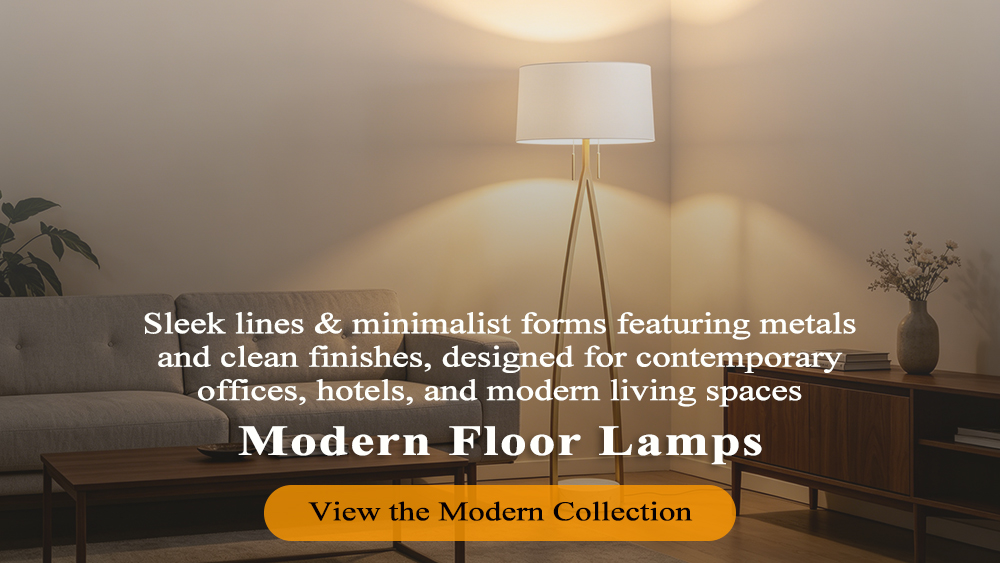
Modern: Suits contemporary offices, boutique hotels, and minimalist interiors. Look for clean lines, matte finishes, and geometric forms.
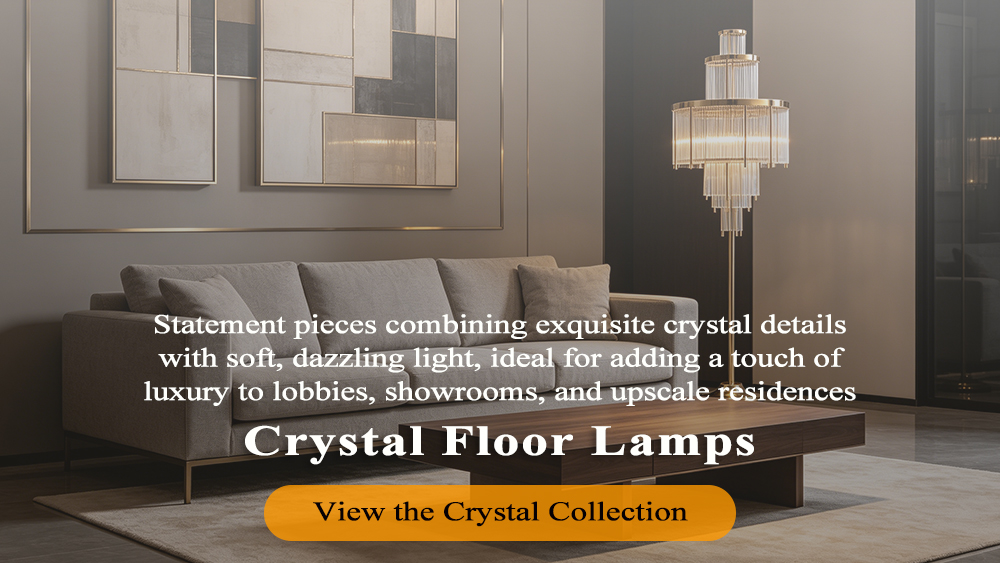
Crystal: Acts as a centerpiece in lobbies, high-end retail, and formal dining areas, adding sparkle and a luxury accent.
Vintage/Industrial: Ideal for creating character in cafes, boutique stores, or residential lofts, often incorporating mixed materials like aged iron and glass.
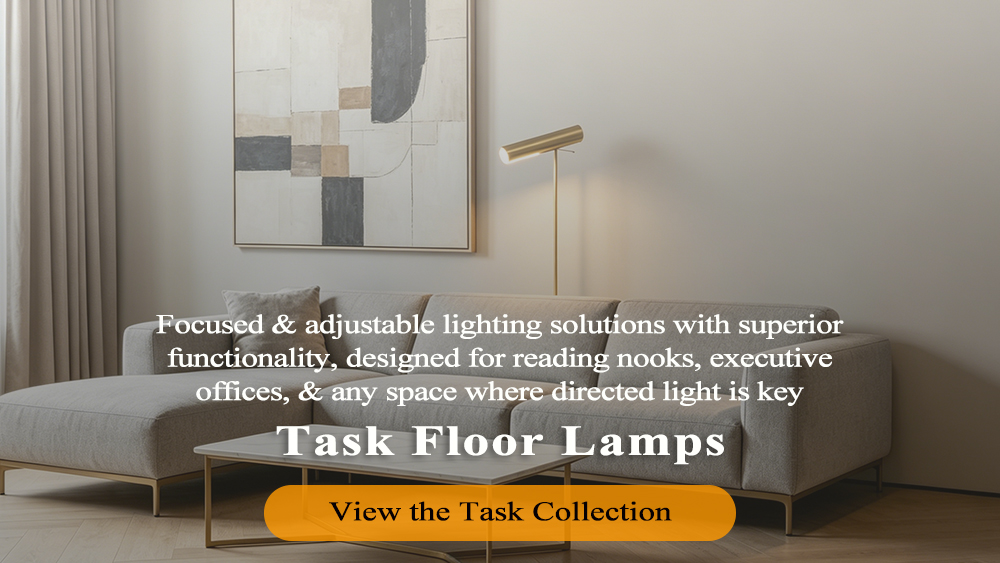
Task/Articulating: The practical choice for residential reading nooks, hotel suites, co-working spaces, and anywhere adjustable, direct light is needed.
5. Practical Placement & Styling Tips
Guide your clients or team on optimal use:
Creating Zones: Use a pair of floor lamps to flank a sofa or armchairs, instantly defining a conversation area in an open-plan space.
Layering Light: Combine a floor lamp (for ambient/task) with overhead and table lamps to create a rich, dynamic, and flattering lightscape.
Highlighting Architecture: Place an arc floor lamp over a sideboard or console table to draw attention to the area without needing ceiling installation.
6. Common Questions & Simple Checks
“The lamp feels wobbly.” Ensure all parts are fully tightened during assembly. A weighted base is crucial for stability, especially for taller or top-heavy designs.
“The light is too harsh/too dim.” Verify the bulb wattage and color temperature. Always use the bulb type specified by the manufacturer for optimal performance.
“The dimmer switch is flickering.” This is almost always caused by an incompatible dimmer switch or non-dimmable LED bulb. Ensure all components are dimmer-compatible
Conclusion
A well-chosen floor lamp is a strategic investment in a space’s functionality and personality. By focusing on quality of construction, appropriateness of style, and versatility of application, you can specify pieces that elevate your projects and satisfy your end-clients. For our partners, this translates to fewer callbacks, stronger project presentations, and a reputation for delivering thoughtful, high-quality solutions.
Ready to specify with confidence? Contact us to discuss your project requirements, request detailed catalogs for any style category, or order evaluation samples to experience the Tikanna difference firsthand.
Download Our Catalog
to see how we’ve helped others realize their vision.
Consult with Our Team
to discuss the specific possibilities for your next project.